Meta Description: Considering a glamping business on your property? Get a complete guide on legality, setup, costs, and profitability. Learn how to create a luxury nature retreat.
1. Quick Answer (TL;DR)
Yes, you absolutely can create a glamping site on your own land, and it can be a lucrative venture. However, there are several key steps you must take: first, check local zoning laws and secure required permits; second, invest in high-quality infrastructure tailored to glamping; third, assess your target market and plan your offerings accordingly. With careful planning through these steps, your glamping business can transform your land into a source of significant income while offering guests a unique luxury outdoor experience.
2. Understanding the Question
When you ask, “Can I do glamping on my land?” you’re really asking several layered questions. You’re wondering about legality, profitability, feasibility, and the sheer scope of the undertaking. This question is common among landowners who see the booming demand for unique, comfortable outdoor accommodations and envision capitalising on their own slice of nature.
Glamping, or “glamorous camping,” combines nature with luxury. Guests expect more than sleeping bags—they want comfort like real beds, private bathrooms, climate control, and unique structures. Your land offers them a special experience, not just a place to sleep.
3. Detailed Explanation
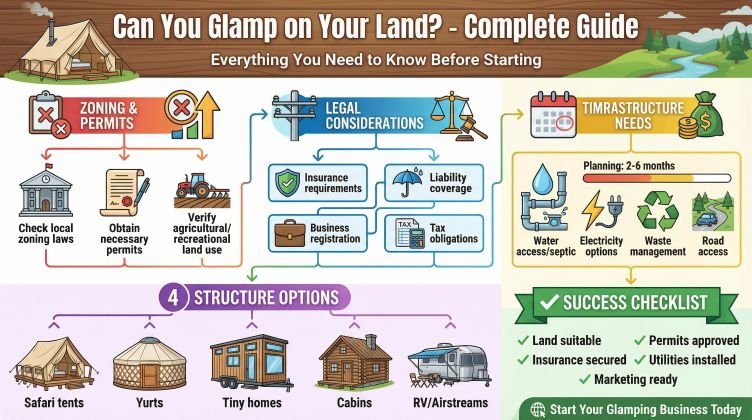
Transforming your land into a glamping destination involves these main steps: assess the property for accessibility and natural features, ensure compliance with all legal and zoning requirements, plan and install suitable infrastructure, and develop a marketing strategy to attract your ideal guests. Following this sequence will help create a successful site.
Legal and Zoning Considerations
This is the most critical first step and where many aspiring glamping hosts hit their first roadblock.
- Zoning Laws: Check your local county or municipal zoning ordinances. Land is typically zoned for residential, agricultural, commercial, or mixed-use. You’ll need to see if “short-term rental,” “tourist accommodation,” or “recreational use” is permitted. Rural or agricultural zones are often more flexible but may have specific restrictions.
- Permits: You will likely need building permits for any permanent structures (even decking or platforms) and possibly electrical/plumbing permits. A “change of use” permit might be required to operate a commercial venture on the land.
- Health and safety rules cover sanitation, water, and fire safety. Many sites use composting toilets and propane showers to make this easier.
- Business Licenses & Taxes: You’ll need to register your business, obtain an operator’s license, and understand your liability insurance needs and local occupancy tax (tourist tax) collection requirements.
Navigating regulations can be daunting. Consider using a service like LegalZoom to help formally establish your LLC and ensure your business structure is sound from the start.
Site Assessment and Planning
Not all land is created equal for glamping. Conduct a thorough assessment:
- Access: Is your land reachable year-round? Is it private but easy to find?
- Utilities: Will you provide power? Solar is popular for off-grid sites. Safe water and waste disposal are key.
- Topography & Views: Flat areas for structures are essential. Capitalise on natural features like water views, forest clearings, or mountain vistas.
- Privacy: Space units so guests feel secluded. Natural foliage helps create intimacy.
Investment and Infrastructure
This is where your budget comes into play. Costs vary widely by luxury level.
- Structures: Choices range from $2,000 bell tents to $20,000+ domes or tiny houses.
- Interiors: Quality, weatherproof furniture and bedding define the luxury experience.
- Amenities Such as Private fire pits, outdoor bathtubs, hot tubs, kitchenettes, and Wi-Fi boosters can command higher nightly rates.
- Shared Facilities: Communal check-in, bathrooms, or game rooms may be needed.
For durable, stylish, and weather-resistant outdoor furniture that wows guests, browse Frontgate’s curated collections. Their pieces are designed to withstand the elements while providing ultimate comfort.
Marketing and Operations
Once your site is built and ready, the next key step is to focus on filling your bookings. Attract and retain guests through strategic marketing and strong operational systems.
- Define Your Niche: Are you targeting couples, families, or wellness seekers? Your theme guides marketing.
- Professional Photography: High-quality photos are essential to attract bookings.
- Listing Platforms: List on major sites like Airbnb, VRBO, and Glamping Hub. Consider a direct-booking website to save on commission fees.
- Operations: Create systems for cleaning, maintenance, guest communication, and key/access management. Many hosts use property management software.
4. Key Points
- Due Diligence is Paramount: Never skip the zoning and permit research. A cease-and-desist order can shut down your dream overnight.
- Experience Over Stuff: Guests pay for memories. Focus on the overall experience—stargazing, peace, adventure—not just a fancy tent.
- Sustainability Sells: Eco-friendly practices (solar power, composting toilets, local materials) are both cost-effective and a major marketing advantage for your target audience.
- Start Small: Launch with one or two exceptional units. Master the operations, gather reviews, and then scale using the generated revenue.
- Insurance is Essential: Standard homeowner’s insurance won’t cover a commercial glamping business. Seek specialised commercial liability insurance.
5. Examples and Case Studies
Case Study 1: The Empty Nester Couple (Blue Ridge Mountains)
A couple with 20 wooded acres in an agricultural zone started with two high-quality canvas bell tents on raised platforms. They invested in real beds, vintage rugs, and propane-fired outdoor showers. They marketed exclusively as a “digital detox romantic retreat” with no Wi-Fi, but also provided guided hiking notes and local wine-pairing baskets. Within 18 months, they expanded to three domes with skylights for stargazing and now command $350/night with a 90% occupancy rate.
Case Study 2: The Affluent Millennial Family (Pacific Northwest)
A young family built two custom-designed tiny houses on a portion of their land near a national park. They focused on family luxury, featuring bunk beds with high-end linens, kitchenettes, and private hot tubs. They partnered with local adventure guides for kayaking and hiking tours (earning affiliate commissions). Their direct-booking website highlights these packages, and they use social media heavily to showcase their own children enjoying the land.
6. Expert Insights
We spoke with Maya Sterling, founder of a consultancy that helps launch glamping sites:
“The most common mistake is underestimating the operational workload. This is a hospitality business. Your guests expect a hotel-level of cleanliness and service in the middle of a field. Invest in a robust, automated booking and communication system from day one. Also, don’t blindly copy others. What makes your land unique? Is it the birdlife, the geology, the history? Weave that unique story into every aspect of your guest’s journey, from your website copy to the welcome book in the tent.”
Streamline your guest experience and save hours with Pricelabs, a dynamic pricing and revenue management tool tailored for vacation rentals. Maximise your income automatically.
7. Additional Resources
- Books: The Glamping Business Blueprint by Sarah Riley; Start Your Own Glamping Business from Entrepreneur Press.
- Online Communities: Facebook groups like “Glamping Business Owners” and “The Glamping Show” forum are invaluable for peer advice.
- Suppliers: Research reputable structure suppliers like CanvasCamp, Bell Tent UK, or Pacific Yurts for long-term quality.
- Courses: Consider online courses from established glamping operators that cover everything from site design to marketing funnels.
8. Conclusion
So, can I do glamping on my land? The answer is a resounding but qualified yes. It represents a formidable opportunity to generate substantial income from underutilised property while sharing your love of nature with discerning guests. The path involves meticulous planning, a respectful approach to regulations, a significant investment in quality, and a deep commitment to hospitality. For those willing to do the homework and pour their passion into creating something special, turning your land into a glamping sanctuary can be one of the most rewarding ventures imaginable—financially and personally. Start with the legalities, dream big on the experience, and build your luxury outdoor haven one step at a time.
Take the first step toward your glamping business—shop luxury bedding, portable power stations, and other essentials now at REI Co-op, and start building your five-star outdoor retreat today.
9. Frequently Asked Questions
Q: How much land do I need for a glamping site?
A: There’s no fixed minimum, but 5-10 acres is ideal for creating a sense of privacy and space between 2-4 units. You can operate on less if you have clever landscaping and your target market values location (e.g., near a vineyard or park) over vast expanses.
Q: What is the average startup cost?
A: Costs range from $15,000 for a simple, single high-end tent setup to $100,000+ for multiple units with full amenities like plumbing and kitchens. A common middle-range startup for 2-3 quality units with good infrastructure is $30,000-$60,000.
Q: How profitable is a glamping business?
A: Profitability varies widely. A well-run, marketed single unit charging $250/night at 60% annual occupancy can generate ~$55,000 in annual revenue. After operational costs (cleaning, maintenance, utilities, marketing), net profit margins often range from 40-60%.
Q: Can I run a glamping site if I don’t live on the property?
A: Yes, but it’s more challenging. You will need a reliable, on-call local team for cleaning, maintenance, and guest emergencies. Automated check-in (key lockboxes or smart locks) and a responsive remote communication system are essential.
Q: Do I need to provide bathrooms for each unit?
A: Not necessarily, but it drastically increases appeal and allows you to charge premium rates. Many successful sites start with a central, immaculately clean and stylish bathroom/shower block. The ultimate luxury, however, is a private en-suite bathroom.
Ensure your guests sleep soundly in nature. Invest in Parachute’s premium linen bedding and towels—their quality and comfort turn a good glamping stay into an exceptional one, leading to stellar reviews and repeat bookings.