Meta Description
Discover how to glamp on your own with this complete guide. Learn the step-by-step setup, essential gear, and tips to avoid common pitfalls for a luxurious outdoor escape. Perfect for families and couples.
Quick Answer (TL;DR)
DIY glamping transforms traditional camping with comfort upgrades like plush bedding and gourmet setups, offering an affordable, customizable luxury outdoor experience. It eliminates high resort costs and addresses concerns about comfort and amenities, putting you in control.
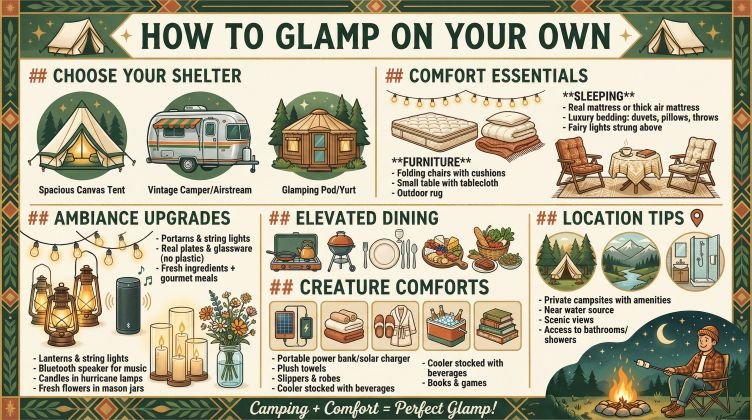
To get started quickly, choose a scenic location such as your backyard, a national park campground, or a remote spot with permission. Invest in a spacious tent you can stand in, such as a bell tent or a large cabin-style model. Add cozy elements—queen-sized air mattresses, soft sheets from home, string lights, and comfortable seating. Plan meals for portable grills and pack essentials, such as a first-aid kit and weather-appropriate clothing. Test your setup at home first to ensure everything works seamlessly.
This approach suits affluent millennials seeking luxury retreats, empty nesters seeking comfortable nature escapes, families seeking unique vacations, and couples seeking romantic outings. With proper planning, you can create an authentic, comfortable experience for under $500 initially, scaling up as needed.
Expect 4-6 hours for setup on your first try, but it gets easier with subsequent tries. Focus on sustainability by leaving no trace and choosing durable, eco-friendly gear.
Understanding the Question
The query “how to glamp on your own?” refers to creating a glamorous camping (glamping) experience independently, without relying on commercial glamping sites or resorts. Glamping blends the adventure of camping with hotel-like luxuries, such as comfortable beds, stylish decor, and convenient amenities. Doing it “on your own” means a DIY approach: sourcing your gear, selecting your location, and setting up everything yourself.
This appeals to our target audience because it solves key pain points. Affluent millennials seek Instagram-worthy outdoor experiences without the $500+ nightly costs of luxury glamping. Empty nesters want serene nature retreats that offer comfort, while families with children seek special, safe vacations. Adventure-seeking couples crave romantic getaways that blend intimacy with the outdoors.
Glamping on your own gives you control over costs, customization, and authenticity. Bring your own amenities to avoid uncertainty, start small at home, or choose wilderness for more adventure. The process is budget-friendly and empowering.
Detailed Explanation
Glamping originated as a trend for those who love nature but prefer comfort over hardship. Unlike traditional camping with basic tents and sleeping bags, glamping offers amenities like queen beds, rugs, lanterns, and even chandeliers, creating a boutique-hotel vibe in the wild.
Why do it on your own? Commercial glamping can be pricey and hard to book in top spots. DIY glamping lets you tailor the experience: add games for kids, romantic wine setups, or meditation spaces. Enjoy cost savings, location flexibility, and a sense of achievement.
For affluent audiences, it’s about quality over quantity—investing in durable items like canvas bell tents that last for years. Pain points like high equipment costs are mitigated by starting with essentials and upgrading gradually. Authentic experiences come from choosing remote spots, but with comforts like insulated coolers and portable power banks, you avoid uncertainties about amenities.
In 2026, glamping gear has evolved to use sustainable materials, such as recycled fabrics and solar-powered gadgets, making it more eco-conscious. Trends include modular setups for easy transport and smart weather-monitoring technology. This makes DIY glamping accessible and appealing to people of all ages.
Step-by-Step Process
Creating your own glamping setup is straightforward with planning. Here’s a detailed guide:
Step 1: Plan Your Location and Timing
Choose a spot that matches your group’s needs. Backyards work for beginners or families with kids—safe and convenient. For adventure, opt for campgrounds in national parks like Jamaica’s Blue Mountains (near Kingston) or remote beaches. Check permits, weather forecasts, and accessibility. Aim for mild-weather seasons; avoid rainy periods unless you have waterproof gear.
Step 2: Gather Essential Gear
Start with a spacious tent (6-8 person for comfort). Add sleeping setups: air mattresses or cots with toppers. Include decor such as rugs, pillows, and lighting. Pack cooking tools: portable stove, cooler, and utensils. Don’t forget hygiene items like a solar shower.
Step 3: Set Up Your Campsite
Arrive early. Clear the ground, lay a tarp, pitch the tent. Inflate beds and make them. Hang lights, set up chairs. Create sleeping, cooking, and lounging zones.
Step 4: Add Luxurious Touches
Incorporate home comforts—fresh flowers, books, or a Bluetooth speaker. For families, add games; for couples, candles (battery-operated for safety).
Step 5: Enjoy and Pack Out
Savor activities like stargazing or gourmet meals. Follow Leave No Trace principles: clean up thoroughly.
This process takes 2-4 hours once practiced.
Tips and Best Practices
To elevate your DIY glamping:
- Comfort First: Use memory foam toppers and real pillows for a bed-like sleep experience.
- Lighting Magic: String solar LED lights for ambiance; they’re eco-friendly and bug-repelling.
- Gourmet on the Go: Pre-plan meals with cast-iron cookware for fancy dishes like grilled salmon.
- Weather Prep: Pack layers and a rainfly; use apps for real-time forecasts.
- Sustainability: Choose biodegradable products and reusable items to minimize impact.
- Test Run: Practice in your backyard to iron out kinks.
For families, include kid-friendly activities; for couples, focus on privacy. Best practice: Budget 20% extra for unexpected needs.
Common Mistakes to Avoid
Avoid these pitfalls for a smooth experience:
- Overpacking: Bring only essentials to avoid clutter; prioritize multi-use items.
- Poor Site Selection: Don’t set up in low areas prone to flooding; choose flat, dry spots.
- Ignoring Weather: Always check forecasts—underestimating cold or rain ruins comfort.
- Cheap Gear: Skimping on tents leads to leaks; invest in quality for longevity.
- Food Storage Errors: Secure food to prevent wildlife encounters.
- No Planning: Research locations thoroughly to avoid permit issues or amenity shortages.
Learning from these ensures your glamping is luxurious, not laborious.
Tools and Resources Needed
Essential glamping gear for 2026 includes:
- Tent: Regatta Bell Tent—spacious, durable canvas. Get the best glamping tent of 2026 from White Duck Outdoors [affiliate link] for stormproof comfort.
- Bedding: Queen air mattress with built-in pump, plus luxury sheets.
- Lighting: Solar string lights and lanterns.
- Cooking: Portable grill and cooler: Upgrade with the PACKFIRE Fire Pit for smokeless fires.
- Seating: Comfortable camp chairs like HEST Foamy.
- Power: Solar generator for charging.
- Hygiene: Portable toilet and shower.
Resources: REI Co-op for gear advice, apps like AllTrails for locations. Budget: $300-800 starter kit. Shop KingCamp glamping accessories for durable, luxurious items. For biology-inspired tips, use apps to identify local flora.
Try Trekology’s luxury camping essentials. Total investment pays off quickly.
Conclusion
Glamping on your own lets you enjoy adventure and luxury built to your preferences. This guide helps you avoid high costs and have memorable experiences. Start small, improve each trip, and embrace the outdoors in style.
Frequently Asked Questions
What is the difference between camping and glamping?
Camping is basic outdoor sleeping; glamping adds luxuries like beds and decor for comfort.
How much does it cost to glamp on your own?
Initial setup: $300 – $1,000, depending on gear quality. Ongoing trips are low-cost.
Can I glamp in my backyard?
Yes! It’s ideal for beginners and families.
What if it rains during my glamping trip?
Use waterproof tents and tarps; have indoor activities ready.
Is glamping suitable for kids?
Absolutely—add safe, fun elements like tents with dividers.
How do I make glamping romantic?
Include wine, candles, and private setups.
What are the best glamping tents for 2026?
Bell tents, like Regatta or eco-domes, are durable.
Do I need electricity for glamping?
Not necessarily—solar options work great.
How to stay warm while glamping?
Layer clothing, use insulated sleeping bags, and portable heaters.
Can glamping be eco-friendly?
Yes, with sustainable gear and Leave No Trace practices.