Meta Description
Launch your glamping venture with this complete guide to starting a glamping business: essential steps, costs, permits, and tips for profitability and success.
Introduction
Travelers now crave unique, nature-immersed experiences without losing comfort. Starting a glamping business appeals to entrepreneurial minds. Glamping—glamorous camping—blends the allure of the outdoors with luxury amenities like plush beds, en-suite bathrooms, and gourmet setups. Tents, yurts, or domes set the scene. This guide is tailored for hospitality entrepreneurs aged 35-55 seeking a lifestyle business. It also targets eco-conscious landowners aged 40-65 who want passive income from rural or coastal properties. Hospitality professionals 30-50 can diversify from hotels or campgrounds. Early retirees or career changers 45-60 with capital can embark on a meaningful second act.
The appeal is compelling: the glamping market is expanding rapidly, offering high revenue potential, improved guest satisfaction, and profitable returns compared to traditional options. However, common challenges such as high initial capital, regulatory hurdles, and sourcing quality structures can deter some. This guide provides practical solutions to overcome those obstacles, ensuring you can maximize revenue, minimize risk, and unlock the potential of your land or hospitality skills. Whether repurposing unused land or growing an existing business, glamping offers a clear path to financial freedom and personal fulfillment. Let’s break it down step by step.
Understanding the Basics
Before planning the details, it’s important to know what a glamping business is. This section explains the basics, the market size, and why it could be a good fit for you.
What is a Glamping Business?
A glamping business offers upscale camping experiences in structures such as safari tents, yurts, geodesic domes, or treehouses. These feature modern conveniences like electricity, Wi-Fi, and private decks. Unlike traditional campgrounds, glamping emphasizes luxury and exclusivity. It attracts guests willing to pay premium rates—often $150-$500 per night. For eco-conscious landowners, glamping means monetizing natural assets sustainably. For hospitality professionals, it is a way to diversify into experiential tourism.
Market Trends and Demand
The glamping industry thrives on post-pandemic demand for safe outdoor escapes. In North America, prime sites can achieve 60-80% occupancy. Profitability scales quickly. Entrepreneurs benefit from lower ongoing costs than hotels. Early retirees often find it a low-effort, high-reward second career. Global demand is projected to grow. Now is an ideal time to start.
Differences from Traditional Camping Businesses
Traditional camping focuses on budget-friendly, self-sufficient sites with basic amenities. Glamping, however, targets affluent travelers seeking Instagram-worthy stays. It requires higher upfront investments but brings better ROI. Optimized setups can yield up to 47% annually. This model suits career changers with capital. Glamping blends hospitality with environmental stewardship.
Key Considerations
Success in glamping depends on understanding key advantages, such as high earning potential, differentiation through sustainability, and guest experience. This section covers how careful planning around costs, regulations, and equipment can help you realize these benefits and minimize common challenges.
Financial Planning and ROI
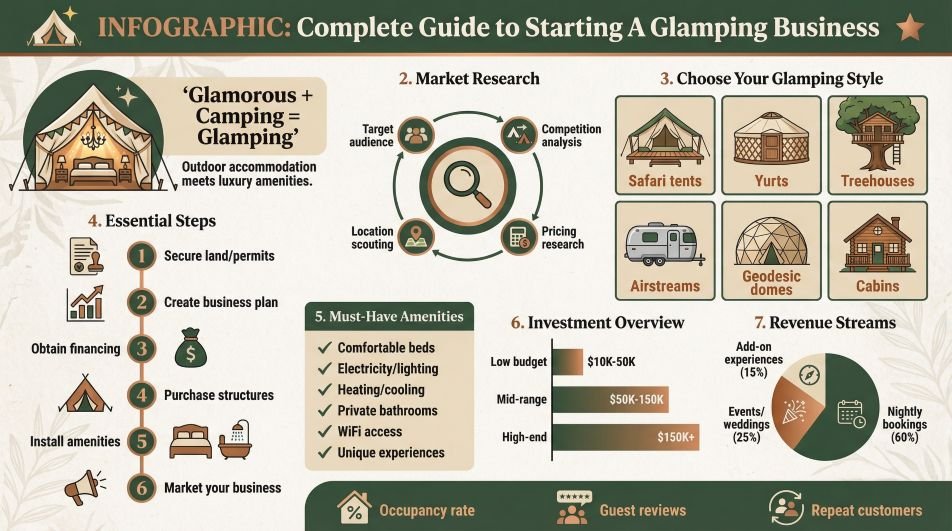
High initial capital is a major hurdle. Startup costs for a 10-unit site in the USA average $755,000. This includes land prep, structures ($1,500-$5,000 per tent), and utilities. Yurts range from $7,500-64,000. Full setups for luxury resorts might reach $922 million, but smaller operations start at $20,000-$215,000. ROI can impress. With 60-80% occupancy, payback takes 1-2 years, and annual profits reach $100,000+ for modest sites. Use ROI calculators to forecast based on your location and scale.
Zoning, Permits, and Regulations
Navigating regulations is complex but essential. Check zoning districts for permitted uses—agricultural land often allows glamping, but urban areas may require conditional use permits (CUPs). Special-use permits require community hearings; limits, such as a limit of three sites per parcel, apply in some areas. Consult local municipalities early to avoid setbacks.
Sourcing Structures and Equipment
Sturdy, good-looking tents matter most. Pick strong, weather-resistant tents or domes from trusted companies to ensure they last.
Step-by-Step Guide
Follow this roadmap to launch your glamping business efficiently.
Step 1: Conduct Market Research and Planning
Assess demand in your area and target eco-tourism hotspots. Create a business plan outlining your unique selling points, like sustainable features for eco-landowners. Feasibility studies help evaluate viability.
Step 2: Secure Land and Check Zoning
If you own property, walk it to plan layouts for privacy and flow. For others, lease or buy rural land. Verify zoning and apply for permits—expect a 3-6 month timeline.
Step 3: Choose and Source Structures
Select units: Tents from Davis Tent ($ varying), yurts, or domes from Glitzcamp. Prioritize suppliers like Exclusive Tents for luxury options.
Invest in durable glamping tents —perfect for your startup.
Step 4: Develop Infrastructure and Utilities
Install septic, water, electricity, and paths. Budget for site prep: $50,000-100,000 for basics. Design for guest movement and sustainability.
Step 5: Set Up Operations and Marketing
Acquire insurance, hire staff if needed, and list on platforms like Glamping Hub. Use PMS software for bookings. Launch with social media, targeting your audience.
Expert Tips
Leverage these insights for an edge:
- Sustainability Focus: Eco-features attract 70% of travelers; use solar power to cut costs.
- Guest Experience Enhancements: Add hot tubs or farm-to-table dining for higher rates.
- Financial Strategies: Start small (1-3 units) to test ROI before scaling.
- Networking: Join associations for guidance on permits.
- Marketing Hacks: Use Instagram for visuals; partner with influencers.
Common Mistakes
Avoid these pitfalls:
- Skipping Zoning Checks: Many fail here, leading to shutdowns.
- Underestimating Costs: Budget overruns caused by hidden fees, such as permit costs.
- Poor Sourcing: Cheap tents warp; invest in quality.
- Ignoring Marketing: Relying on word of mouth delays profitability.
- Overlooking Sustainability: Regulations tighten; plan green from the start.
Conclusion
Starting a glamping business delivers both personal satisfaction and strong financial benefits, especially for those with available land, hospitality experience, or investment capital. By proactively addressing challenges like upfront investment, regulations, and sourcing, you can build a business with robust ROI, delighted guests, and meaningful impact. Begin with research, build strong foundations, and scale in line with your goals. Your path to a rewarding, successful hospitality business starts now—take the first step today.