Meta Description: Discover how glamping works! This guide explains the luxury camping model, from booking to amenities, for travelers seeking comfort in nature. Perfect for first-timers.
Quick Answer (TL;DR)
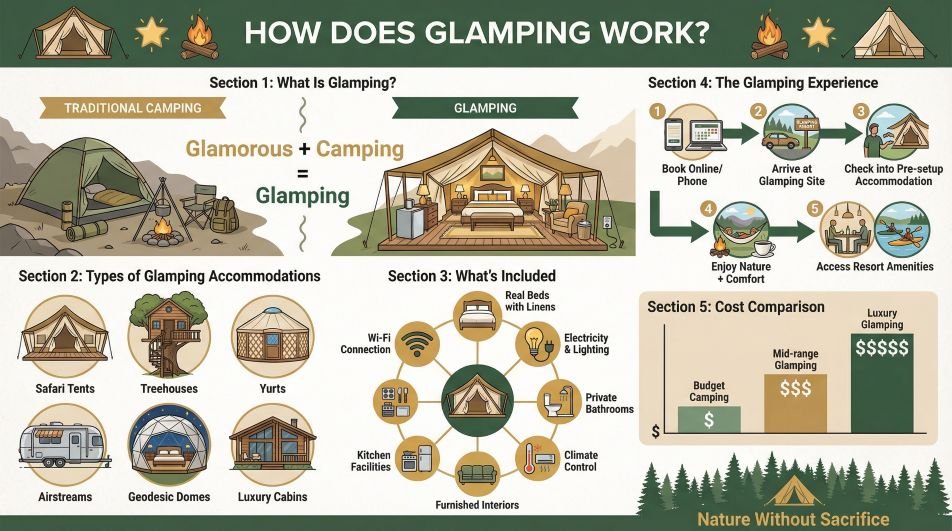
Glamping, or “glamorous camping,” blends the immersive experience of nature with the comforts and amenities of a luxury hotel. You stay in unique, pre-set accommodations—like safari tents, geodesic domes, or treehouses—that feature real beds, electricity, and often private bathrooms. A host or resort manages the property, handling setup, cleaning, and sometimes meals, allowing you to simply arrive and enjoy the outdoors without the work of traditional camping. It bridges the gap between rugged adventure and five-star comfort.
Understanding the Question: More Than Just a Fancy Tent
When someone asks, “How does glamping work?” they’re usually seeking to understand the practical mechanics behind the idyllic photos. It’s not just about what glamping is (luxury camping), but how it functions logistically: How do you book it? What’s actually provided? Who sets everything up? How is it different from bringing your own high-end gear?
At its core, glamping is a hospitality model based on service. You are not renting equipment; you are booking a curated experience where the infrastructure, comfort, and aesthetic are professionally managed, allowing you to be a guest in nature rather than a laborer.
Detailed Explanation: The 5 Key Components of How Glamping Works
Let’s break down the functional ecosystem that enables a glamping experience.
1. The Accommodation: Structure and Shelter
This is the most visible element. Glamping accommodations are permanent or semi-permanent structures that go far beyond a standard tent.
- Types: Safari tents (with wooden decks), geodesic domes, yurts, Airstream trailers, tiny cabins, treehouses, bell tents, and even repurposed structures like silos or shipping containers.
- These structures are pre-erected on dedicated platforms. You never handle a tent pole—hosts optimize placement for views, privacy, and stability.
2. The Booking & Hospitality Model: The Service Layer
This is the engine behind the experience. Glamping operates similarly to a boutique hotel or vacation rental.
- You book through dedicated glamping websites (like Glamping Hub), resort websites, or marketplaces like Airbnb and Booking.com.
- The host or resort manages everything before and after your stay: cleaning, maintenance, restocking, and amenities. They provide check-in instructions and serve as your main contact. Discover glamping sites and book your retreat through our partner here.
3. The Amenities: Defining “Glamorous.”
Amenities are what transform camping into glamping. They directly address the pain points of uncertainty and discomfort.
- Guaranteed Comforts: A real, high-quality bed with linens is standard. Heating (often a wood stove or electric heater) and cooling (fans, sometimes AC) are common.
- The Bathroom Question: This is a major differentiator. Options range from en-suite private bathrooms (the height of luxury) to private bathrooms a short walk away, to luxurious shared bathhouses with premium fixtures. The product description will always specify this.
- Utilities: Most sites provide electricity (for lighting and device charging) and often WiFi (though speeds vary). Running water is typical, but not universal, in extremely remote locations.
- Kitchen/Kitchenette: Many units have a small kitchenette with a mini-fridge, sink, and coffee maker. Higher-end options may include a cooktop or outdoor grill with basic cookware provided.
4. The Location & Setting: Curated Nature
Glamping sites are set in scenic locations—mountain slopes, vineyards, forests, and lakes. Hosts manage land for beauty and safety, creating pathways, seating areas, and landscaping that enhance nature while remaining controlled.
5. The Experience & Activities: Optional Add-Ons
Many glamping resorts operate like full-service retreats. You can often book:
- On-site activities: Yoga sessions, guided hikes, farm tours, or wine tastings.
- Meal services: Pre-arrival grocery packs, ready-to-cook meal kits, or even delivered breakfast baskets.
- Experience Concierge: Hosts can arrange off-site activities such as kayaking, spa visits, or restaurant reservations.
Key Points: What Makes the System Tick
- You Pay for Convenience & Uniqueness: The cost covers the specialized structure, its maintenance, land use, and services. You’re investing in saved time and a unique aesthetic that’s hard to replicate.
- Spectrum of Service: Glamping ranges from “self-catered” (where you bring food and manage the fire) to “full-service” (with daily cleaning and a restaurant). Always read the details.
- It’s Weather-Resilient: Proper glamping structures are designed for seasons, with insulation, rain-proofing, and decks to keep you clean and dry, mitigating a classic camping worry.
- Hosts handle waste, recycling, and environmental impact, letting you enjoy nature responsibly without extra logistics.
Examples and Case Studies
Case Study 1: The Romantic Couple’s Getaway
- How it Works: A couple of books, a geodesic dome with a clear roof for stargazing. They receive a digital guide with a key code for contactless check-in. The dome has a king bed, an electric blanket, a modern en-suite bathroom with a rain shower, and a small deck with a hot tub. The host has left a local bottle of sparkling wine as a welcome gift. They spend their days hiking recommended trails and their nights in the hot tub, never having to build a fire or worry about bedding.
Case Study 2: The Luxury Family Travelers
- How it Works: A family of four books a two-bedroom safari tent at a “glamping resort.” The resort has a central lodge serving breakfast and dinner. The tent has bunk beds for kids, a private deck, and its own bathroom. The resort staff coordinates a daily schedule of kid-friendly activities (scavenger hunts, s’mores-making), while parents relax, knowing setup, clean-up, and activity planning are handled.
Expert Insights
We spoke with Sarah Miller, founder of a premier glamping resort in the Pacific Northwest, who clarified the operational heart of glamping:
“Guests often think the magic is just in the structure, but the real work is in the invisible systems. We have to manage water delivery and septic systems off-grid, provide robust yet sustainable power, and maintain a level of cleanliness that meets luxury hotel standards in the middle of a forest. When guests arrive at a perfectly made bed, a spotless bathroom, and a lit fire pit, they’re seeing the result of a huge operational backend. That’s how glamping works in reality—it’s wilderness hospitality engineering.”
Her top tip for guests? “Communicate your expectations clearly when booking. If a private bathroom is non-negotiable, filter for it. If you want total solitude, ask about the proximity of other units. A good host will be transparent.”
Additional Resources
Pack right for glamping. Linens and main furniture await, but personal items and extras are up to you. For packing tips—from portable speakers to camp blankets—see our gear guide here.
Considering becoming a glampier yourself? The startup cost for quality equipment is high. If you’re intrigued by the idea of creating your own luxury camp, explore our review of professional-grade bell tents and high-end camping furniture suitable for a personal glamping setup.
Conclusion
Glamping works by decoupling the reward of deep nature immersion from the labor traditionally required to achieve it. The service industry builds, maintains, and curates unique outdoor dwellings, providing a turnkey solution for those who crave the sounds of a forest or the view of a mountain range but also want a comfortable bed, a hot shower, and a solid roof.
It answers the modern traveler’s desire for authentic, Instagram-worthy experiences while uniquely guaranteeing comfort and convenience. Whether it’s a one-night romantic escape or a week-long family adventure, the glamping model stands out by seamlessly blending wilderness and luxury, brilliantly packaged for today’s traveler.y Asked Questions
Q: Is glamping worth the high cost compared to traditional camping or a hotel?
A: It depends on your priorities. If you value unique accommodations, time saved on setup/clean-up, and a guaranteed level of comfort in nature, it is worth the premium. It’s less expensive than a luxury hotel in a prime natural destination and more comfortable than DIY camping.
Q: What should I absolutely pack for a glamping trip?
A: Always pack as you would for a hotel stay, but with a nature twist: toiletries (even if basics are provided), layers for variable weather, sturdy shoes, a headlamp (for nighttime bathroom trips), and any specific food/drink you prefer. Most importantly, bring a sense of adventure.
Q: Are glamping sites pet-friendly?
A: Policies vary dramatically. Many are pet-friendly due to their outdoor nature, but some prohibit pets to protect wildlife or maintain allergy-free units. Always filter for “pets allowed” or confirm directly with the host before booking.
Q: How do I know if a glamping site is authentic and well-managed?
A: Scrutinize photos for professional upkeep, read recent reviews mentioning cleanliness and host responsiveness, and look for clear, detailed descriptions of amenities and bathroom situations. Vague listings are a red flag. For peace of mind, browse our vetted list of top-rated glamping resorts with verified guest reviews.