Meta Description: Launch your glamping business confidently. Our guide covers tent selection, zoning, budgeting & expert tips for aspiring hospitality entrepreneurs. Start your journey here.
Introduction: Building Your Dream on a Solid Foundation
Glamping combines demand for unique travel with outdoor appeal, offering entrepreneurs a path to a meaningful, potentially lucrative business. Whether you’re a hospitality visionary, a landowner seeking passive income, or a career-changer, your first crucial decision is choosing the right structures.
Your glamping tents are more than just accommodations; they are the physical heart of your brand and your biggest initial investment. This guide offers a clear, actionable roadmap for selecting the best tents and for taking the essential steps to start a glamping business. Key takeaway: The right tents define both guest experience and business viability.
Understanding the Glamping Tent Basics: Types and Terminology
Before diving into purchases, understand the landscape of permanent and semi-permanent outdoor structures.
Primary Tent Types for Commercial Use
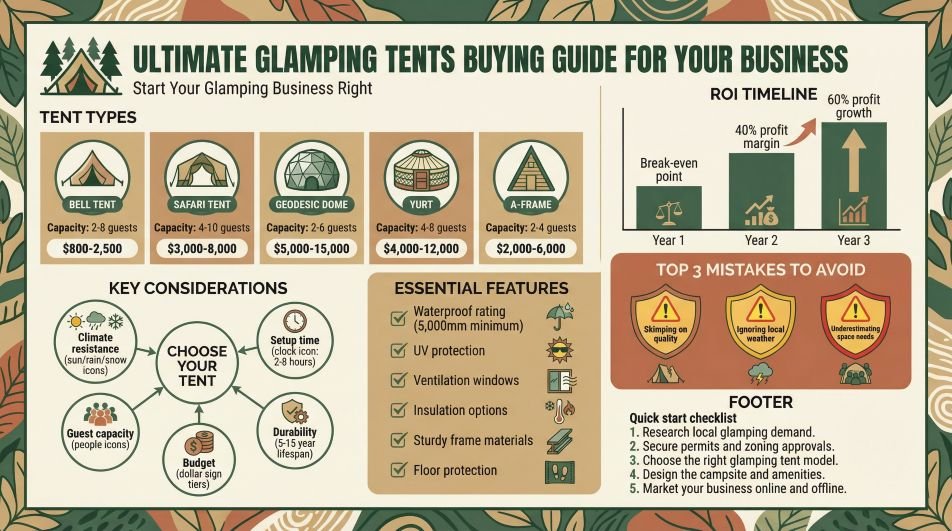
- Safari Tents (Canvas Lodge Tents): The industry standard. Characterized by their high, vertical walls, peaked roofs, and spacious interiors (often 16’x20’ and larger). They feel more like a room than a tent, allowing for proper space division (e.g., sleeping area, lounge) and the installation of real furniture. Durable cotton canvas or poly-cotton blends are typical.
- Bell Tents (Luxury Camping Tents): Iconic and romantic, with a single central pole creating a circular footprint. Best for a more “camping-plus” aesthetic. Sizes typically range from 16ft to 23ft in diameter. They are generally more affordable and faster to set up than safari tents, but offer less headroom at the edges and fewer options for interior walls.
- Geodesic Domes: Futuristic and immersive. Their spherical structure is incredibly strong against wind and snow, and the framework allows for stunning panoramic views when covered with a clear PVC panel or mesh. They create a memorable “wow” factor but can have more complex assembly and interior layout challenges.
- Yurts: The ancient, time-tested design from Central Asia. Circular, with a lattice wall and a central crown, they are incredibly sturdy, energy-efficient, and offer a unique, cozy atmosphere. Modern commercial yurts come with full insulation packages and are excellent for four-season operations.
Key Material & Construction Terms
- Canvas: Heavy-duty cotton duck or poly-cotton blend; breathable, thermally efficient, and ages well. Needs periodic re-waterproofing.
- PVC Vinyl: Synthetic, waterproof, lighter, and low maintenance. It can cause condensation and lacks a natural feel.
- Frame Material: Prefer powder-coated galvanized steel or sturdy aluminum. Gauge and design determine wind and snow loads.
- Groundsheet: A sturdy, waterproof floor is essential for commercial use.
Key Considerations Before You Buy a Single Tent
This is where successful businesses are made.
1. Zoning, Permits, and Land-Use Reality Check
Your local jurisdiction’s rules will dictate everything. Never assume you can place tents on your land.
- Action: Schedule a pre-application meeting with your county planning department. Ask specifically about “temporary” or “permanent recreational structures,” occupancy permits, wastewater solutions (septic vs. composting toilets), fire safety codes, and required setbacks from property lines and waterways.
- Pain Point Solution: This step mitigates the single biggest risk—investing in structures you aren’t legally allowed to use. Factoring in permit costs and possible required upgrades in your initial capital plan can prevent costly missteps. Key takeaway: Navigating regulations upfront safeguards your investment.
2. Defining Your Business Model & Budget
Your tents must fit your brand and business model.
- Budgeting: A high-quality commercial-grade safari tent can range from $8,000 to $25,000+ installed, depending on size, materials, and add-ons. Bell tents start around $2,500. Remember, this is just the shell. Interior fit-out (furniture, linens, decor, plumbing, electrical) often costs 1.5-2x the price of the tent itself.
- ROI Calculation: Model your projected nightly rate (research competitors in your region), estimated occupancy rate (start conservatively at 40-50%), and operating costs. This will tell you how many units you need to reach profitability and what you can afford to spend per unit. To streamline this critical financial planning, consider using a specialized business plan template for hospitality ventures, available here.
3. Climate, Seasonality, and Durability
A tent suitable for the desert may not work in the Northwest.
- Four-Season vs. Three-Season: Four-season tents have insulation, heavier canvas, and frames for snow load—essential for winter and a longer season.
- Weatherproofing: Look for details such as storm flaps over zippers, reinforced tie-down points, rain gutters on safari tents, and a high hydrostatic head (HH) rating for the fabric, indicating water resistance.
Step-by-Step Guide to Selecting and Sourcing Your Tents
Phase 1: Design Your Guest Experience
Plan the stay: romantic, minimalist, or family-friendly? This shapes size and layout. Couples can use a 16ft bell or 20’x16’ safari tent; families need 20’x20’ or larger, with partitions.
Phase 2: Source Reputable Suppliers
Choose commercial suppliers over consumer camping brands.
- Direct from Manufacturers: Many source from specialized fabricators in regions like South Africa (for safari tents), Turkey, or China. Look for companies with a proven track record of B2B sales.
- Distributors & Turnkey Providers: Some companies in the US, Canada, and Europe act as distributors, offering local inventory, installation services, and, in some cases, full turnkey fit-outs. This simplifies logistics but may come at a premium.
- Due Diligence: Request references from other glamping business owners. Ask for detailed material specs, warranty information (at least 2-3 years on frame and fabric), and lead times. For a vetted list of reputable commercial glamping tent suppliers with proven reliability, explore our partner network here.
Phase 3: Evaluate Key Features & Customizations
- Windows & Doors: Multiple large, zip-up windows with insect screens are essential for ventilation and views. French-style double doors elevate the experience.
- Liners & Insulation: An optional inner cotton liner drastically reduces condensation, provides insulation, and gives a finished, clean interior look.
- Utility Access: Pre-installed ports or sleeves for electrical conduit and plumbing lines are a critical customization. Plan this with your supplier.
- Decks & Annexes: A sturdy wooden deck expands living space and keeps guests clean. A bathroom annex attached to the main tent is a premium upgrade that allows for an en-suite setup.
Expert Tips for Long-Term Success
- Start Small, Scale Smart: Begin with 2-3 units. This allows you to refine operations, understand guest flow, and generate revenue to fund expansion without crippling debt.
- Plan for repairs. Choose tents with standardized parts and a local repair resource.
- Invest in a solid foundation and professional installation. Poorly anchored tents wear quickly and cause problems.
- Insurance is essential. Secure liability and property coverage before installation. Confirm your policy includes tents as “permanent structures” for wind, fire, and snow. Work with an insurer experienced in glamping. Get quotes here.
Common Mistakes to Avoid When Starting Out
- Mistake #1: Underestimating Utility Costs. Bringing power, water, and internet to remote sites is expensive. Solar/battery systems and compost toilets are fantastic, but have high upfront costs. Model this accurately.
- Mistake #2: Prioritizing looks over logistics. A beautiful cliffside tent is impractical if it’s hard to maintain. Weigh guest access, cleaning, and supply logistics when planning.
- Mistake #3: Using consumer gear. Furniture, linens, and lighting must handle frequent use and moisture. Invest in commercial, outdoor-rated, easy-to-clean items.
- Mistake #4: Navigating regulations alone. Consult a local attorney or expert on short-term rental laws to avoid costly fines and redesigns.
Conclusion: Your Journey to Hospitality Under the Stars Begins Now
Starting a glamping business is an ambitious and rewarding endeavor that merges passion and entrepreneurship. With detailed planning, the right tent choices, and attention to regulations and logistics, your path to success is clear. Key takeaway: Careful preparation and smart decisions build sustainable glamping businesses.
By treating your tent selection as a strategic business investment rather than just a purchase, you lay an unshakable foundation. You are not just buying canvas and steel; you are procuring the vessels for future memories, the backdrop for countless Instagram posts, and the pillars of your brand. Let this guide serve as your compass. Do your due diligence, crunch the numbers, talk to other owners, and choose structures that promise not just beauty, but durability, compliance, and ultimately, profit.
The market for unique outdoor experiences is waiting. Your perfect piece of land is calling. It’s time to take the first, well-informed step toward building your own sanctuary in the wild.