Meta Description: Explore what is considered glamping in this ultimate guide. From definitions and key features to examples, benefits, and tips for luxury outdoor escapes tailored for millennials, families, and couples.
Quick Answer (TL;DR)
Glamping, blending “glamorous” and “camping,” means upscale outdoor stays—plush beds, private bathrooms, electricity, and sometimes Wi-Fi or gourmet food—delivering luxury in nature. Unlike camping, glamping skips setup and discomfort with ready-made safari tents, yurts, treehouses, or cabins. It’s for those who want nature’s magic without sacrificing ease. Browse Hipcamp for unique U.S. glamping, ideal for affluent millennials or adventurous couples. Book your trip today.
Understanding the Question
When people ask “what is considered glamping?”, they want to know where luxury meets nature—especially if they’re tired of hotels or tents. This question identifies the line between classic camping and upscale escapes—does a fancy tent qualify, or must there be a spa? For our audience, like empty nesters wanting comfort or luxury families with kids, glamping solves high-price, location-finding, and amenity concerns by promising value, vetted places, and clear expectations. This guide clarifies glamping and helps you decide if it’s right for your next trip.
Detailed Explanation
Glamping has grown from a niche trend to a popular option, thanks to increasing demand for unique, sustainable trips. At its core, glamping means enjoying nature with the comforts of boutique hospitality.
Origins and History of Glamping
The word “glamping” emerged in the early 2000s, but the idea is older. Ottoman sultans traveled with lavish tents, African safaris in the 1900s used luxury camps, and El Capitan Canyon in California (opened 2001) helped popularize the style in the U.S. Today, glamping appeals to those seeking nature without camping’s hardships.
How Glamping Differs from Traditional Camping
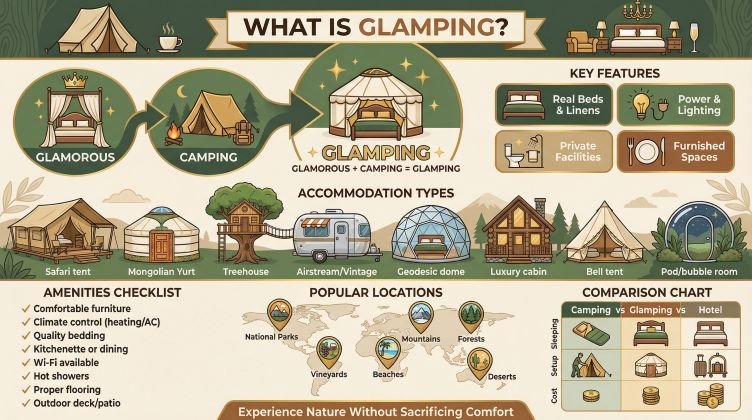
Traditional camping means pitching a tent, sleeping on the ground, and few amenities—think campfires and portable stoves. Glamping upgrades this experience with pre-set stays, electricity, and running water, often with en-suites. No gear needed; all is provided. This makes it accessible to non-campers, such as couples or families, who want convenience.
Types of Glamping Accommodations
Glamping spans various structures:
- Safari Tents: Spacious canvas tents with wooden floors, king beds, and verandas.
- Yurts: Circular, insulated tents inspired by Mongolian designs, often with stoves and bathrooms.
- Treehouses: Elevated cabins with stunning views, perfect for eco-conscious millennials.
- Cabins and Pods: Modern tiny homes or geodesic domes with kitchens and hot tubs.
- Unique Options: Converted airstreams, bubble domes for stargazing, or floating cabins.
Costs range from entry-level sites at $100/night to luxury ones above $500, addressing high expense concerns by offering all-inclusive packages.
Key Characteristics
What truly defines glamping? Here are the essentials:
- Luxury Amenities: Real beds with high-thread-count linens, private bathrooms (often with hot showers), electricity, and heating/AC.
- Nature Integration: Locations in scenic areas like forests, beaches, or mountains, emphasizing sustainability with eco-friendly materials.
- Convenience: No setup required; sites often include Wi-Fi, gourmet meals, and guided activities such as yoga or hiking.
- Exclusivity: Personalized touches, such as concierge services or private decks, create a hotel-like feel in the wild.
- Sustainability Focus: Many glamping sites use solar power and low-impact designs to minimize environmental footprint.
To tackle uncertainty about facilities, always check site descriptions—reputable platforms list amenities clearly.
Real-World Examples
Glamping shines at places like Under Canvas, which rents safari tents by national parks such as the Grand Canyon, offering organic toiletries and tours—great for luxury families.
Montana’s Resort at Paws Up offers upscale tents with butler service and spas—perfect for empty nesters seeking comfort.
Couples may prefer the treehouses at Tuxedo Falls in North Carolina for their romantic atmosphere, waterfalls, and hot tubs.
Yurts at Fairy Stone State Park in Virginia are affordable, cozy options for millennials.
African safaris define glamping with luxury lodges in wild settings. Use Glamping Hub for verified global listings. Explore authentic sites worldwide.
A city family of four chose a yurt in Oregon for their first glamping trip. They walked trails by day and enjoyed board games in comfort at night—meeting kids’ needs without the high hotel charges.
Benefits and Advantages
Glamping offers numerous perks over standard vacations:
- Enjoy nature’s peace and comfort without roughing it.
- Try stargazing in bubble domes or wildlife safaris for memorable adventures.
- Outdoor activities and fresh air can boost mental health, while spa options aid relaxation.
- Accessibility: Suitable for all ages and abilities—no heavy lifting or survival skills needed.
- Though upfront costs may be higher, all-inclusive setups save on gear; look for off-season deals to cut expenses.
- Many sites use eco-friendly designs, appealing to green-minded travelers.
To address pain points, platforms like Airbnb’s glamping category help verify amenities and read reviews to ensure authentic experiences. Find verified glamping on Airbnb.
Related Concepts
Glamping intersects with several trends:
- Eco-Tourism: Focuses on sustainable travel, like solar-powered yurts.
- Vanlife and Overlanding: Mobile glamping in luxury RVs, blending mobility with comfort.
- Boutique Camping: Smaller-scale glamping sites with personalized service.
- Luxury Resorts vs. Glamping: Resorts offer more urban amenities, while glamping emphasizes raw nature.
- Camping Spectrum: From wild camping (minimalist) to glamping (opulent).
Knowing these differences highlights that glamping means comfort and luxury in nature.
Conclusion
In summary, glamping offers luxurious, nature-immersed stays that redefine camping with amenities like beds, bathrooms, and bespoke experiences. It’s perfect for affluent millennials, empty nesters, families, and couples who are addressing challenges like costs and amenity concerns through thoughtful planning. Whether in a treehouse or a safari tent, glamping delivers authentic adventures in comfort. Ready to try? Invest in quality gear like a portable hot tub for home glamping setups. Shop luxury camping essentials on Amazon. Or book directly—Under Canvas offers stunning options. Reserve now. Embrace the glamour!
Frequently Asked Questions
Q: What is the average cost of glamping?
A: Ranges from $100-$500 per night, depending on location and amenities. Budget options exist for value seekers.
Q: Is glamping suitable for families with children?
A: Absolutely—many sites offer kid-friendly activities and safe, comfortable setups.
Q: How do I find authentic glamping experiences?
A: Use platforms like Hipcamp or Glamping Hub, read reviews, and check for sustainability certifications.
Q: What should I pack for glamping?
A: Less than camping—essentials like clothing, toiletries; sites provide most gear.
Q: Is glamping environmentally friendly?
A: Often yes, with low-impact designs, but verify site practices.
Q: Can glamping be done year-round?
A: Yes, with insulated structures and heating for winter escapes.
Q: What’s the difference between glamping and a cabin rental?
A: Glamping emphasizes tent-like structures in nature, while cabins are more permanent.
Q: Are pets allowed in glamping sites?
A: Many are pet-friendly; confirm policies.
Q: How has glamping evolved post-pandemic?
A: Increased demand for private, outdoor spaces with contactless features.
Q: Can I set up glamping at home?
A: Yes, with backyard tents and luxury add-ons for practice runs.